Child Tax Credit 2026: What Parents Need to Know About the Potential $3,000 Per Child

Anúncios
The Child Tax Credit 2026 is poised to provide substantial financial assistance to eligible families, with proposals suggesting an increase to $3,000 per child to alleviate economic burdens.
Anúncios
As we approach 2026, many American families are eagerly anticipating updates regarding the Child Tax Credit 2026. This vital federal program, designed to offer financial relief to parents, is potentially set for significant enhancements, including an increased benefit of up to $3,000 per child. Understanding these proposed changes and their implications is crucial for effective financial planning.
Understanding the Child Tax Credit Evolution
Anúncios
The Child Tax Credit (CTC) has been a cornerstone of federal support for families for decades, evolving to meet the changing economic needs of the nation. Initially introduced in 1997, its primary goal has always been to reduce the tax burden on families with qualifying children, thereby supporting child-rearing costs and promoting financial stability. Over the years, the credit has undergone several transformations, reflecting legislative priorities and economic conditions.
From its inception as a non-refundable credit, the CTC has seen periods of expansion, most notably during the COVID-19 pandemic. The American Rescue Plan Act of 2021 temporarily expanded the credit, increasing the maximum amount and making it fully refundable for many families. This temporary expansion allowed millions of low-income families to receive the full benefit, regardless of their tax liability, significantly impacting child poverty rates.
Key Historical Changes and Their Impact
The history of the Child Tax Credit is marked by pivotal legislative actions that have shaped its current form and potential future. Each change has brought both opportunities and challenges for families across the United States. Understanding this trajectory helps us appreciate the significance of proposed changes for 2026.
- 1997 Introduction: Established as a $400 non-refundable credit per child under 17.
- 2001 Tax Cuts: Increased the credit to $1,000 per child and introduced a refundable component.
- 2017 Tax Cuts and Jobs Act: Doubled the credit to $2,000 per child, expanded eligibility, but limited refundability to $1,400.
- 2021 American Rescue Plan: Temporarily raised the credit to $3,600 for children under 6 and $3,000 for those aged 6-17, making it fully refundable and allowing advance monthly payments.
These historical adjustments illustrate a continuous effort to refine the credit to better serve families. The 2021 expansion, though temporary, provided a blueprint for what a more robust and equitable CTC could achieve, particularly in lifting children out of poverty. As discussions for 2026 unfold, policymakers often refer back to these successful, albeit temporary, measures.
The ongoing debate surrounding the Child Tax Credit for 2026 is deeply rooted in these past experiences. Advocates for a permanent expansion often cite the positive effects observed during the 2021 expansion, emphasizing the importance of predictable and substantial financial support for families. Conversely, concerns about fiscal responsibility and the broader economic impact also play a significant role in shaping future policy decisions.
Proposed Changes for the Child Tax Credit in 2026
The landscape of the Child Tax Credit is constantly under review, with various proposals emerging to modify its structure and benefits. For 2026, several key changes are being discussed, most notably the potential increase to $3,000 per child. These proposals aim to provide more substantial and accessible financial assistance to families, building on lessons learned from previous iterations of the credit.
One of the most significant proposed changes centers on the maximum credit amount. Moving from the current $2,000 per child back to a higher figure, such as $3,000, would represent a considerable boost for many households. This increase is often coupled with discussions about making the credit fully refundable, ensuring that even the lowest-income families can receive the full benefit, regardless of their tax liability.

Key Legislative Proposals and Their Focus
Several legislative proposals are currently on the table, each with its own set of priorities and potential impacts. These proposals reflect differing philosophies on how best to support families through the tax code. Understanding their core tenets is essential for anticipating the final form of the Child Tax Credit 2026.
- Increased Credit Amount: Many proposals advocate for a return to the $3,000 or even $3,600 per child levels seen in 2021. This aims to provide a more meaningful financial cushion.
- Full Refundability: A central point of contention and advocacy is making the credit fully refundable, which ensures that families with little to no tax liability can still benefit from the full amount.
- Age Expansion: Some proposals suggest expanding the age limit for qualifying children, potentially including 17-year-olds or even college-aged dependents.
- Advance Payments: Reinstating monthly advance payments is also a popular suggestion, as it provides consistent financial support throughout the year rather than a lump sum at tax time.
The debate surrounding these proposals often highlights the tension between providing broad-based relief and targeting specific demographic groups. Advocates for expanded benefits emphasize the role of the CTC in reducing child poverty and stimulating local economies. Conversely, opponents often raise concerns about the overall cost and potential inflationary effects of such expansive programs.
Ultimately, the final form of the Child Tax Credit in 2026 will likely be a result of bipartisan negotiations and compromises. Families should stay informed about these ongoing discussions, as the specific details of the legislation will directly influence their eligibility and the amount of credit they can expect to receive.
Eligibility Requirements for the 2026 Child Tax Credit
While the specifics of the Child Tax Credit 2026 are still being debated, certain core eligibility requirements are likely to remain consistent with previous iterations of the program. Understanding these fundamental criteria is the first step for parents to determine if they might qualify for the expanded benefits. Eligibility typically revolves around the child’s age, relationship to the taxpayer, residency, and the taxpayer’s income.
For a child to qualify, they must generally be under a certain age by the end of the tax year, typically 17 years old. They must also be a U.S. citizen, national, or resident alien. Furthermore, the child must live with the taxpayer for more than half the year, and the taxpayer must provide at least half of the child’s support. These foundational rules ensure that the credit is directed towards those genuinely responsible for a child’s upbringing.
Who Qualifies as a ‘Qualifying Child’?
The definition of a ‘qualifying child’ is central to CTC eligibility. While seemingly straightforward, there are specific nuances that taxpayers must understand to correctly claim the credit. These criteria are designed to prevent fraudulent claims and ensure the benefits reach their intended recipients.
- Age Test: The child must be under the age of 17 at the end of the tax year (December 31, 2026).
- Relationship Test: The child must be your son, daughter, stepchild, foster child, brother, sister, half-brother, half-sister, stepbrother, stepsister, or a descendant of any of them (for example, a grandchild).
- Residency Test: The child must have lived with you for more than half of the tax year.
- Support Test: The child must not have provided more than half of their own support for the year.
- Joint Return Test: If the child is married, they cannot file a joint return for the year (unless filed only to claim a refund of withheld income tax or estimated tax paid).
It is important for parents to keep accurate records of these factors, especially regarding residency and support, as they may be required to substantiate their claims. The Internal Revenue Service (IRS) provides detailed guidelines, and consulting these or a tax professional can help clarify any ambiguities.
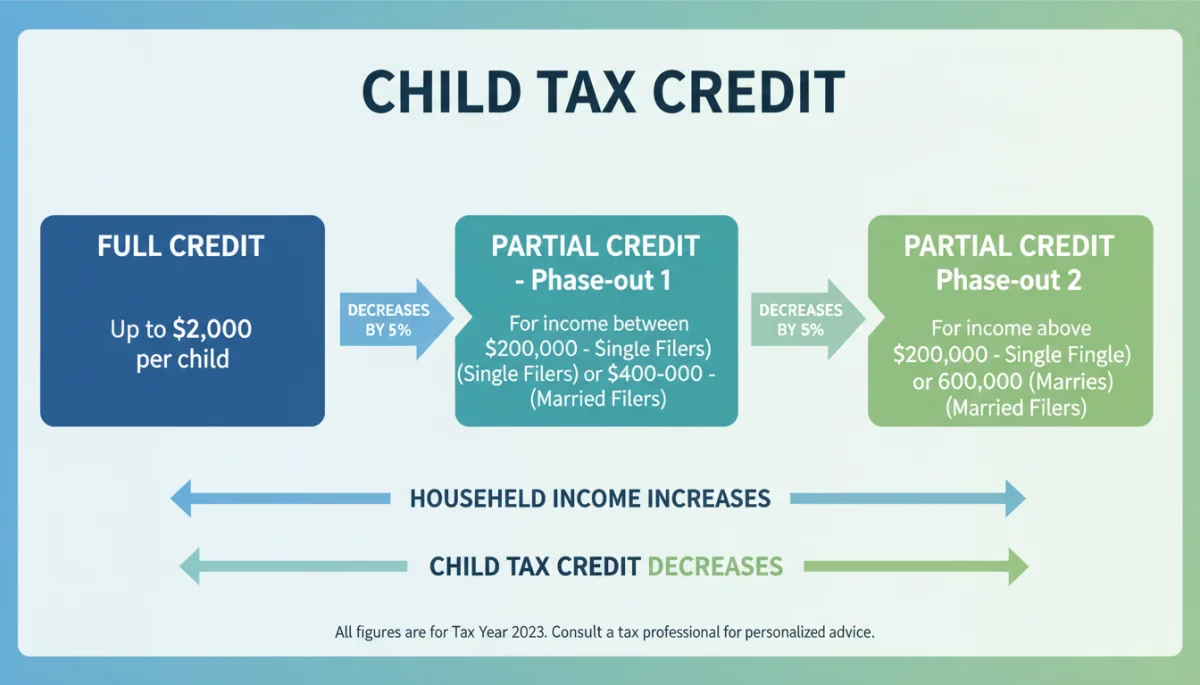
Income thresholds also play a critical role in determining eligibility and the amount of the credit. While the proposed $3,000 per child is a headline figure, it typically begins to phase out for higher-income earners. The exact income limits for 2026 will depend on the final legislation, but they are designed to ensure the credit primarily benefits middle and lower-income families. Staying informed about these thresholds is crucial for maximizing your potential benefit.
The Potential Impact of a $3,000 Per Child Credit
An increase in the Child Tax Credit to $3,000 per child in 2026 would represent a substantial financial boost for millions of American families. This enhanced credit has the potential to significantly alleviate financial pressures, particularly for households grappling with rising costs of living, childcare expenses, and educational needs. The implications extend beyond individual family budgets, potentially influencing broader economic trends.
For many families, an additional $1,000 per child (compared to the pre-2021 $2,000 credit) could mean the difference between struggling to make ends meet and achieving greater financial stability. This extra capital could be utilized for essential needs such as groceries, housing, healthcare, or investments in children’s education and development. The flexibility of the credit allows families to allocate funds where they are most needed.
Economic and Social Benefits of an Expanded CTC
The benefits of an expanded Child Tax Credit are not merely confined to individual households; they ripple through communities and the national economy. Research from previous expansions, such as the 2021 American Rescue Plan, has demonstrated a clear link between increased CTC benefits and positive societal outcomes. These impacts are often cited by proponents advocating for a permanent and expanded credit.
- Poverty Reduction: A higher CTC is a powerful tool against child poverty, helping to lift millions of children out of economic hardship.
- Economic Stimulus: When families receive more disposable income, they tend to spend it on goods and services, injecting money back into local economies.
- Improved Child Outcomes: Financial stability allows parents to invest more in their children’s nutrition, healthcare, and education, leading to better long-term outcomes.
- Reduced Inequality: By disproportionately benefiting lower and middle-income families, an expanded CTC can help reduce income inequality across the nation.
The potential for the Child Tax Credit 2026 to significantly reduce child poverty is a particularly compelling argument. Studies have shown that even modest increases in family income can have profound effects on children’s health, academic performance, and future earning potential. By investing in children through the CTC, society is effectively investing in its future workforce and citizenry.
Moreover, the economic stimulus provided by an expanded credit can be crucial, especially during periods of economic uncertainty. When families have more money to spend, businesses benefit, leading to job creation and overall economic growth. This cyclical effect underscores the broad-reaching positive impacts of a more generous Child Tax Credit.
Navigating the Application and Claim Process for 2026
While the specific details for the 2026 Child Tax Credit are still being finalized, the general process for applying and claiming the credit is likely to follow established patterns. Understanding these steps in advance can help parents prepare and ensure they receive the full benefit they are entitled to. The most common method for claiming the CTC is through filing a federal income tax return.
Typically, eligible families will claim the Child Tax Credit when they file their annual tax return using IRS Form 1040. There, they will include Schedule 8812, which is specifically for the Credit for Qualifying Children and Other Dependents. This form helps calculate the exact amount of credit a family is eligible for, taking into account income levels and the number of qualifying children.
Important Steps for Claiming Your Credit
To ensure a smooth and successful claim for the Child Tax Credit 2026, parents should be proactive in their preparation. Keeping meticulous records and understanding key deadlines are paramount. These steps are generally applicable regardless of the final legislative details.
- Gather Documentation: Collect all necessary documents, including Social Security numbers for all family members, birth certificates, and income statements (W-2s, 1099s).
- Understand Eligibility: Review the most current eligibility requirements for the CTC, paying close attention to age, relationship, and residency tests for each child.
- File Accurately: Use tax software or a qualified tax professional to ensure your tax return (Form 1040 and Schedule 8812) is completed accurately and on time.
- Monitor IRS Updates: Stay informed about any official announcements from the IRS regarding the Child Tax Credit for 2026, especially concerning new forms or procedures.
One potential change that could impact the claim process is the reintroduction of advance monthly payments, as seen in 2021. If this provision is included in the 2026 legislation, families might need to opt-in or update their information through an IRS portal to receive payments throughout the year, rather than waiting for their tax refund. This would require families to monitor IRS communications closely.
Regardless of whether advance payments are reinstated, accurate record-keeping is critical. Any discrepancies or missing information can delay the processing of your credit. It is always advisable to consult with a tax professional if you have complex financial situations or are unsure about any aspect of claiming the Child Tax Credit.
Comparing 2026 Proposals to Previous Child Tax Credit Structures
To fully grasp the significance of the proposed Child Tax Credit 2026, it is helpful to compare it with previous structures, particularly the pre-2021 credit and the temporary expansion of 2021. This comparison highlights the key differences and the potential benefits that families could experience under the new proposals.
The pre-2021 CTC generally offered a maximum of $2,000 per child, with a refundable portion capped at $1,400 per child. This meant that many low-income families who did not owe significant federal taxes could not receive the full benefit. The income thresholds for phase-out were also different, often beginning at lower adjusted gross incomes (AGI).
Key Differences in Credit Amounts and Refundability
The proposed changes for 2026 aim to address some of the limitations of the pre-2021 structure, drawing inspiration from the more expansive 2021 version. The core differences lie in the maximum credit amount and, crucially, the extent of its refundability.
- Maximum Credit: Proposed 2026: Up to $3,000 per child (potentially $3,600 for younger children). Pre-2021: Up to $2,000 per child. 2021 Expansion: Up to $3,000 or $3,600 per child.
- Refundability: Proposed 2026: Strong push for full refundability. Pre-2021: Partially refundable, capped at $1,400. 2021 Expansion: Fully refundable.
- Income Thresholds: While subject to negotiation for 2026, proposals often aim for higher income thresholds before phase-out, similar to the 2021 expansion.
- Advance Payments: Proposed 2026: Discussions about reinstating monthly advance payments. Pre-2021: No advance payments. 2021 Expansion: Monthly advance payments were a key feature.
The move towards full refundability is perhaps the most impactful change. When a credit is fully refundable, eligible families receive the full amount of the credit, even if it exceeds their tax liability, effectively acting as a direct payment. This was a critical feature of the 2021 expansion that significantly reduced child poverty.
By comparing these structures, it becomes clear that the current proposals for the Child Tax Credit 2026 lean heavily towards a more generous and inclusive design, reminiscent of the temporary 2021 expansion. This reflects a growing consensus among some policymakers about the effectiveness of a robust CTC in supporting families and the broader economy. However, the final details will depend on legislative negotiations and the political climate leading up to 2026.
Future Outlook and What Parents Should Do Now
As discussions around the Child Tax Credit 2026 continue, parents might feel uncertain about what to expect. While the exact legislative outcome is still pending, there are proactive steps families can take now to prepare for potential changes and ensure they are well-positioned to benefit from any new provisions. Staying informed and organized will be key.
The future outlook for the CTC is one of cautious optimism for many advocates, who hope to see a permanent expansion that mirrors the impactful 2021 program. However, legislative processes are complex, and the final bill may include compromises that alter some of the more ambitious proposals. Regardless, it is highly probable that some form of enhanced Child Tax Credit will be in place for 2026.
Preparing for the Child Tax Credit 2026
Parents don’t need to wait for final legislation to start preparing. Several actions can be taken now to streamline the process of claiming the credit when the time comes. These steps focus on financial organization and staying abreast of official announcements.
- Stay Informed: Regularly check reliable sources like the IRS website, reputable financial news outlets, and government publications for the latest updates on CTC legislation.
- Organize Records: Ensure all essential documents, such as birth certificates, Social Security cards for all family members, and income records, are easily accessible and up-to-date.
- Review Income: Understand your household’s adjusted gross income (AGI) as this will be a primary factor in determining your eligibility and the amount of credit you receive.
- Consult a Tax Professional: If your financial situation is complex or you have questions, consider speaking with a tax advisor who can provide personalized guidance as new information becomes available.
Another important consideration is to factor potential CTC benefits into your long-term financial planning, but with a degree of flexibility. While an expanded credit could significantly boost your budget, it’s wise not to rely entirely on specific figures until legislation is finalized. Instead, consider the potential credit as a beneficial addition rather than a guaranteed component of your core budget.
By taking these proactive steps, parents can minimize uncertainty and maximize their chances of benefiting from the Child Tax Credit 2026. The goal is to be prepared for various scenarios, ensuring that when the new provisions are enacted, you are ready to claim the support your family deserves.
| Key Aspect | Brief Description |
|---|---|
| Potential Credit Amount | Proposals suggest up to $3,000 per qualifying child for 2026. |
| Refundability | Strong legislative push for full refundability, benefiting low-income families. |
| Eligibility Focus | Primarily for children under 17, with income phase-outs to target middle and lower-income households. |
| Claim Process | Claimed via IRS Form 1040 and Schedule 8812; potential for advance monthly payments. |
Frequently Asked Questions About the Child Tax Credit 2026
Current proposals suggest the Child Tax Credit for 2026 could increase to $3,000 per qualifying child. Some discussions even include a higher amount, like $3,600, for children under six years old, similar to the temporary expansion seen in 2021.
There is a significant legislative push to make the Child Tax Credit fully refundable in 2026. If enacted, this would allow low-income families to receive the full credit amount, even if they owe little to no federal income tax.
Typically, a qualifying child must be under 17 years old at the end of 2026, related to you, live with you for more than half the year, and not provide more than half of their own support. They must also be a U.S. citizen, national, or resident alien.
The Child Tax Credit typically phases out for higher-income earners. While the exact income thresholds for 2026 are subject to final legislation, they are designed to ensure the credit primarily benefits middle and lower-income families, similar to past structures.
The reintroduction of advance monthly payments, as seen in 2021, is a possibility for the 2026 Child Tax Credit. This provision is part of ongoing legislative discussions and would provide families with regular payments throughout the year, rather than a single tax-time lump sum.
Conclusion
The discussions surrounding the Child Tax Credit 2026 signal a potential for substantial financial relief for American families. With proposals aiming to increase the credit to $3,000 per child and enhance its accessibility through full refundability, parents have good reason to stay informed. This article has explored the historical context, current proposals, eligibility criteria, and the profound economic and social impact such an expansion could have. By understanding these key aspects and taking proactive steps to prepare, families can navigate the upcoming changes with confidence, ensuring they are ready to benefit from the support designed to foster their children’s well-being and financial stability.
